There is a common belief: the wider the promises a partner makes, the more attractive the partner looks to the client. In practice, it is the depth of engineering thinking that decides whether a partner stays in the game for the long term or drops out after the first serious project.
Engineering expertise is not having specialists on the payroll or giving presentations with impressive figures. It is the team's ability to understand a project before it starts, to see bottlenecks, to prevent risks, and to offer decisions that save the client time and money. In real EPC and supply projects this shows up in details: how quickly the partner reacts to changes, how deeply the partner understands the process technology, and how transparently decisions are documented.
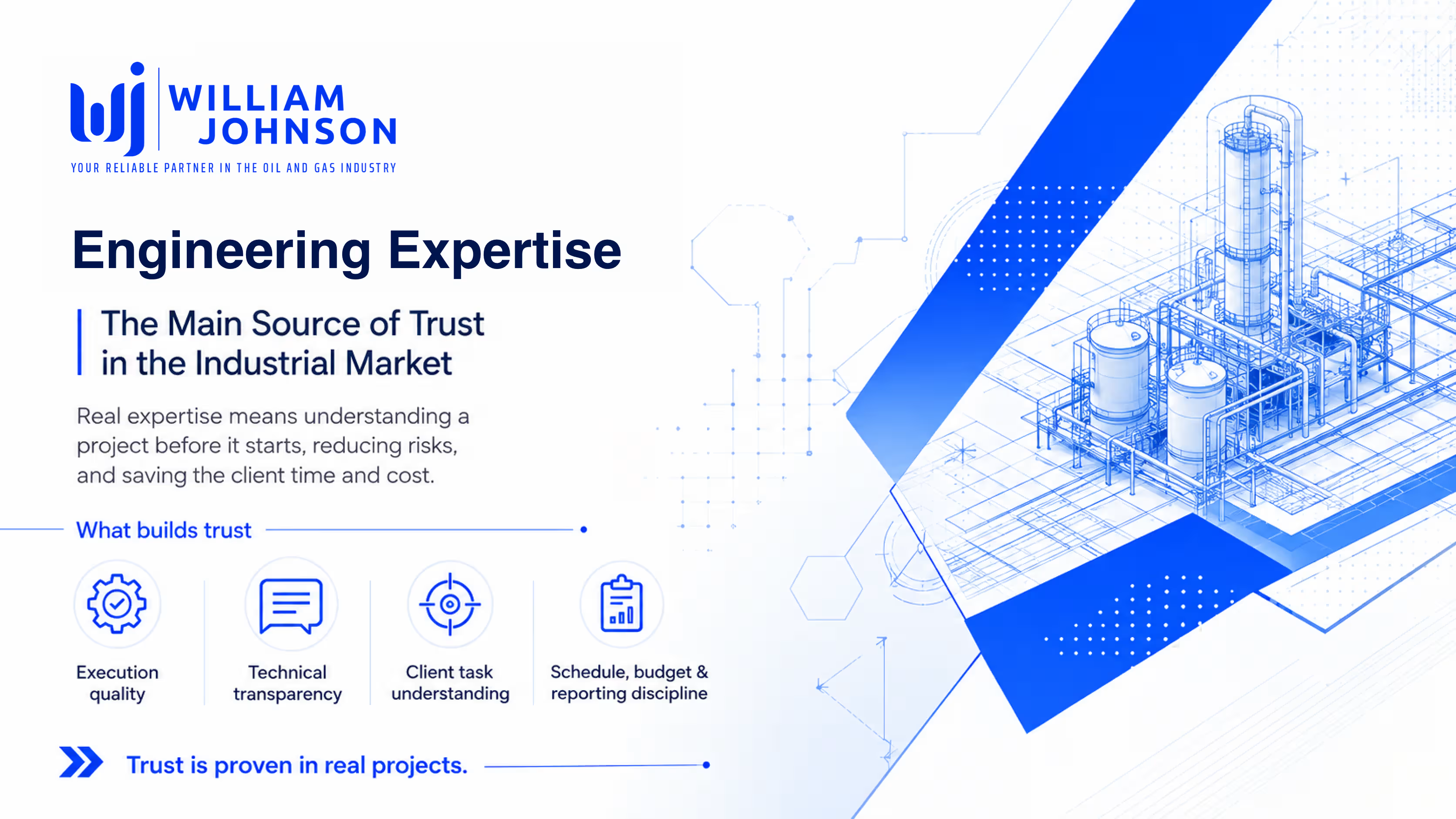
Trust in the industrial market is built from four repeatable factors: consistency in the quality of execution, transparency in technical communication, understanding of the client's task rather than only the partner's own delivery, and discipline in schedule, budget, and reporting. Every one of these factors can only be proven through real projects, not through marketing materials.
The market is changing: projects are becoming more complex, regulatory requirements are growing, and clients' technological expectations are rising. In these conditions, companies that invest in their own engineering school, in project culture, and in the quality of expertise gain the advantage. They do not try to adjust to the project as it moves - they come into the project already knowing how to do it right.
For the client, a partner's engineering expertise means fewer risks, fewer reworks, and less uncertainty. It lowers the total cost of ownership of the project and accelerates its delivery. That is why, in the long term, trust is won not by the partner that is louder, but by the partner that is steadily deeper.
Engineering expertise is not a marketing bullet point. It is an operating culture that over time becomes the most valuable asset of a business. This is exactly why it becomes the main source of trust in the industrial market.
%20(1).jpg)


.svg)
.svg)

