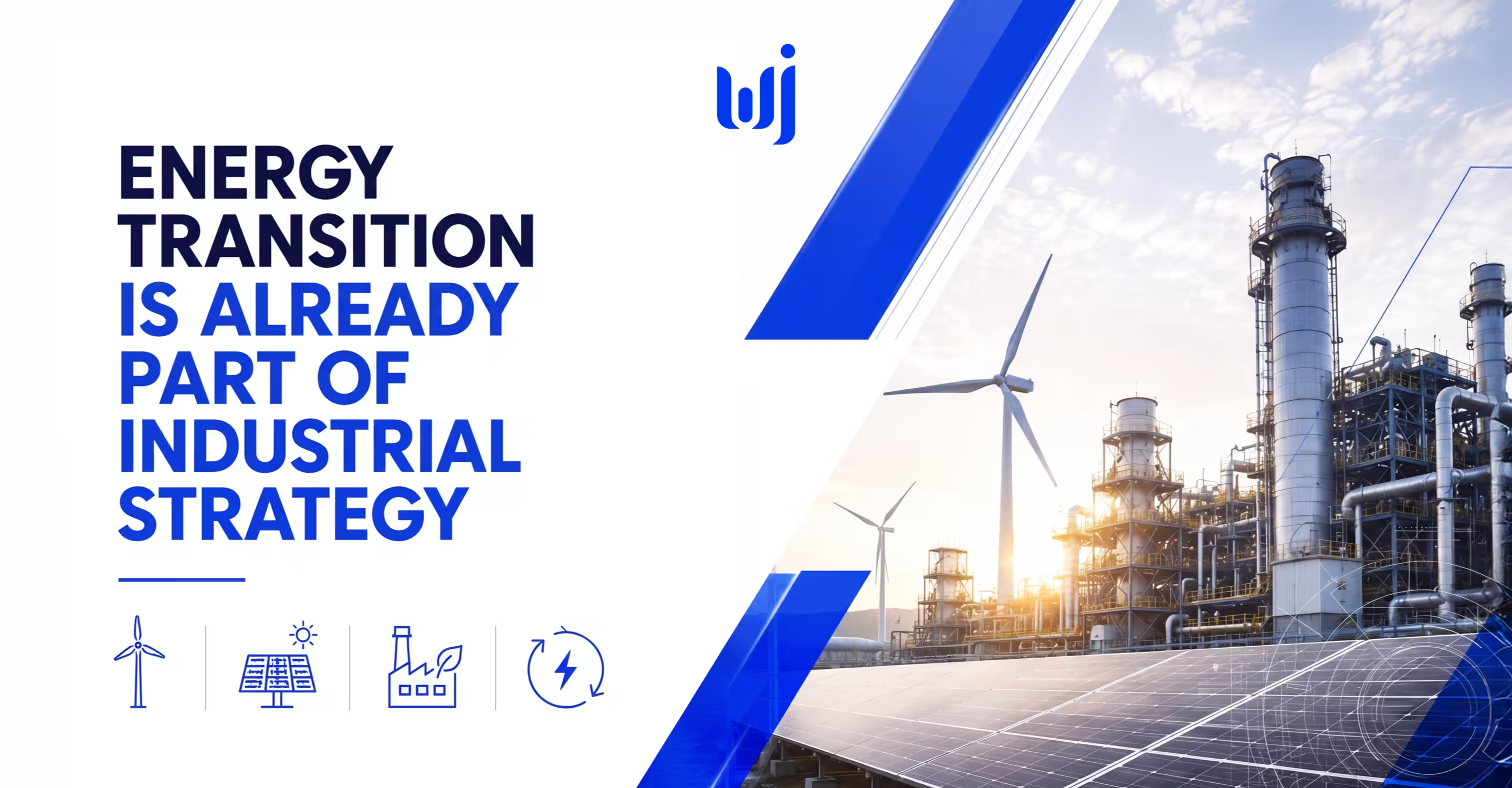
Not long ago, the energy transition was viewed as a separate ESG agenda: something about reports, initiatives, and near-environmental programs. That perception is outdated.
The energy transition has already become part of industrial strategy, and this changes the requirements for engineering partners.
For industrial companies, the question is increasingly not whether sustainability should be considered, but how new energy requirements can be incorporated into real projects without compromising operational reliability, productivity, or economic viability.
Energy transition priorities are increasingly influencing the way industrial projects are planned, engineered, and operated.
Projects must now integrate cleaner solutions where technically and economically applicable. This can include energy-efficiency measures, alternative energy sources, hydrogen technologies, carbon capture solutions, and other approaches designed to reduce the environmental impact of industrial operations.
As these requirements become more closely connected with investment and operational decisions, the energy transition moves beyond corporate reporting and becomes an engineering challenge.
Companies that take the transition seriously are restructuring their internal processes and technical capabilities.
This involves updating engineering expertise, working with new types of equipment and technologies, adapting project documentation, and maintaining direct dialogue with regulators and other industry stakeholders.
Engineering partners therefore need to understand both established industrial systems and emerging technologies. The challenge is not simply to introduce something new, but to determine how it can be integrated effectively into existing infrastructure and operating environments.
The most valuable role of engineering expertise is the ability to connect new requirements with real operating practice.
Energy transition strategies must ultimately translate into specific technical decisions. Every proposed solution has to be evaluated against the realities of the facility, including existing equipment, production requirements, infrastructure limitations, safety standards, investment priorities, and project budgets.
This practical connection between strategy and execution is what determines whether an energy transition initiative can create measurable long-term value.
Industrial decarbonization cannot be approached through emissions reduction alone. Solutions must also preserve the reliability and productivity of the facility while remaining economically realistic.
The objective is to identify technical decisions that can simultaneously:
This balance is becoming one of the defining engineering challenges of the energy transition.
The transition toward cleaner industrial systems will require more than ambitious targets. It requires engineering capabilities that can convert those targets into practical projects.
Energy efficiency, alternative energy sources, hydrogen, carbon capture, and other emerging technologies must be evaluated within the specific technical and economic context of each facility.
For engineering companies, this creates a broader responsibility: understanding new technologies while maintaining the practical experience required to implement them safely, efficiently, and realistically.
The energy transition is no longer separate from industrial strategy. It is increasingly embedded in the way projects are designed, investments are evaluated, technologies are selected, and industrial assets are operated.
The role of engineering expertise is to turn these changing requirements into workable technical solutions.
This is not about slogans. It is about making specific engineering decisions that reduce emissions, preserve productivity, and fit the project budget at the same time.
%20(1).jpg)


.svg)
.svg)

